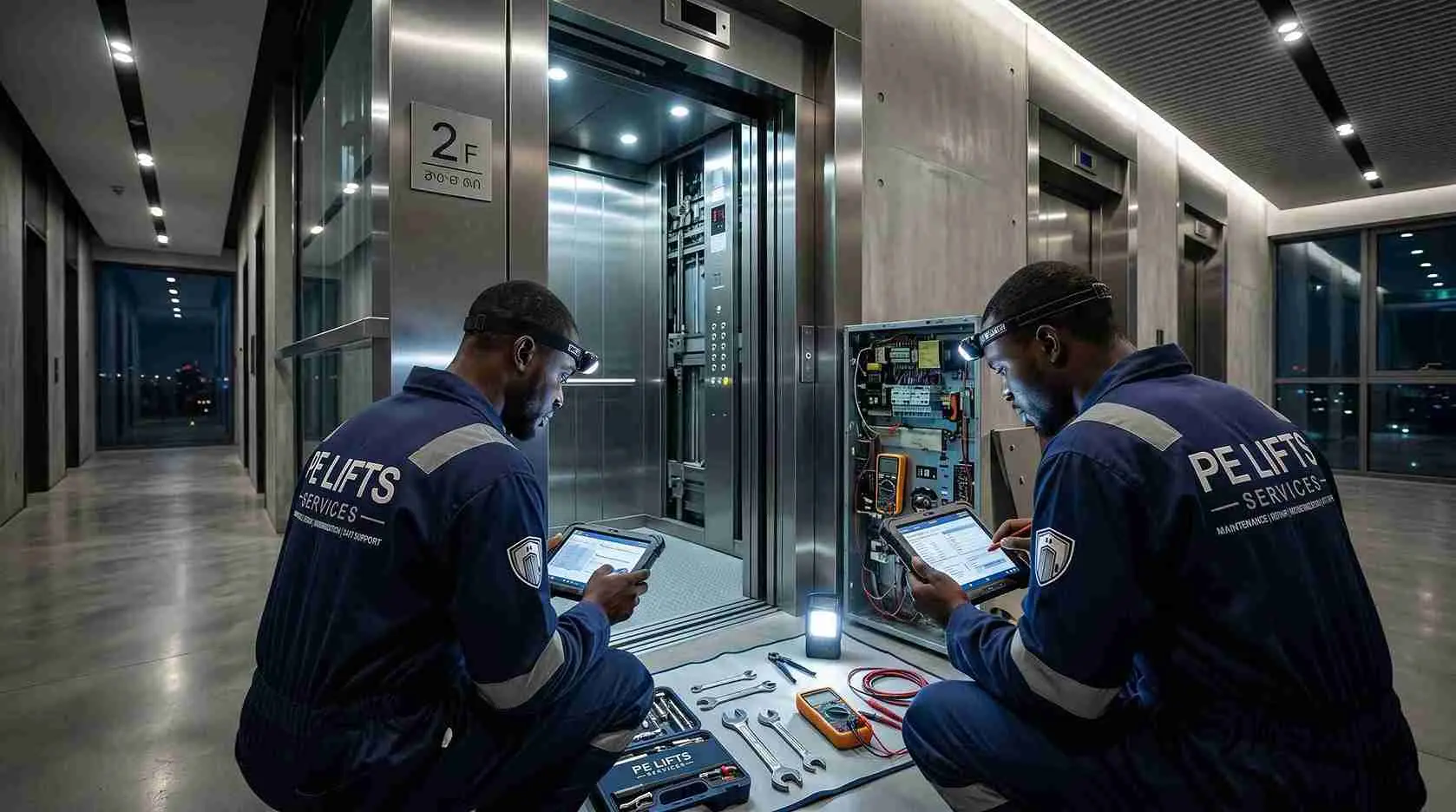

Elevators are critical assets for any multi-story building. When they operate smoothly, they go unnoticed. When they fail, they disrupt operations, frustrate tenants, and pose serious safety risks. Despite this, many building owners fall prey to common elevator maintenance myths. These misconceptions can lead to catastrophic equipment failures, skyrocketing repair bills, and severe compliance issues. This guide debunks the most common elevator maintenance myths, providing the elevator maintenance facts every building owner should know to protect their investment and ensure optimal performance.
Why Do Elevator Maintenance Myths Persist?
Elevator maintenance myths persist primarily due to a lack of technical knowledge, short-term budget pressures, and outdated industry practices. Many facility managers inherit legacy systems and assume that "if it isn't broken, it doesn't need fixing." Additionally, the complexity of modern commercial elevator maintenance makes it easy for non-specialists to misunderstand the value of preventive elevator maintenance versus reactive repairs. Recognizing these misconceptions about elevator AMC is the first step toward optimizing your vertical transportation strategy.
What Are the Most Common Elevator Maintenance Myths?
Myth: "Maintenance is only needed when the elevator breaks down."
Fact: Elevators are complex machines with thousands of moving parts. Waiting for a breakdown guarantees premature wear and catastrophic failure.
Business Risk: Unexpected, prolonged downtime and exponentially higher repair costs.
Best Practice: Implement a scheduled preventive elevator maintenance program to catch issues early.
Myth: "All elevator maintenance contracts are the same."
Fact: Contracts vary wildly in coverage, response times, and parts inclusion. A basic oil-and-grease contract is not equal to a comprehensive AMC.
Business Risk: Hidden costs for parts and labor that were assumed to be covered.
Best Practice: Carefully review elevator AMC services to ensure they include genuine OEM parts and priority dispatch.
Myth: "Older elevators cannot be improved."
Fact: Modernization can upgrade control systems, doors, and safety features, giving older elevators the reliability of new ones at a fraction of the replacement cost.
Business Risk: Continued reliance on obsolete, inefficient, and unsafe technology.
Best Practice: Consult an elevator maintenance company for a modernization assessment.
Myth: "Skipping inspections saves money."
Fact: Skipping inspections violates local safety codes and voids insurance policies, while allowing minor issues to become major failures.
Business Risk: Heavy regulatory fines, legal liability, and voided warranties.
Best Practice: Adhere strictly to monthly or bi-weekly inspection schedules as recommended by industry standards.
Myth: "Any technician can repair an elevator."
Fact: Elevator repair requires specialized, factory-trained certification. Unqualified handymen can cause severe damage and safety hazards.
Business Risk: Botched repairs leading to secondary failures and compromised passenger safety.
Best Practice: Only employ certified, factory-trained technicians from a reputable elevator maintenance company.
Myth: "Emergency repairs are cheaper than preventive maintenance."
Fact: Reactive repairs cost 3 to 5 times more than preventive maintenance due to emergency call-out fees, expedited parts shipping, and collateral damage.
Business Risk: Unpredictable, massive spikes in operational expenditure (OpEx).
Best Practice: Invest in preventive maintenance vs reactive repairs to stabilize long-term budgets.
Myth: "Minor faults can wait."
Fact: Minor faults, like a sticking door or unusual noise, are early warning signs of impending major component failure.
Business Risk: A $50 sensor replacement turns into a $5,000 door operator replacement.
Best Practice: Address all minor faults immediately during routine service visits.
Myth: "Elevators rarely need modernization."
Fact: Elevator technology advances rapidly. Systems over 15-20 years old are prime candidates for modernization to improve energy efficiency and reliability.
Business Risk: Obsolete parts become unavailable, leading to permanent out-of-service status.
Best Practice: Plan for phased modernization every 15-20 years to extend equipment lifespan.
Myth: "Downtime has little business impact."
Fact: In commercial buildings, hospitals, and hotels, elevator downtime directly translates to lost revenue, decreased property value, and tenant churn.
Business Risk: Reputational damage and financial losses far exceeding the cost of proper maintenance.
Best Practice: Prioritize commercial elevator maintenance with guaranteed rapid response times.
Myth: "Preventive maintenance is an unnecessary expense."
Fact: Preventive maintenance is an investment that reduces total cost of ownership by up to 30% over the elevator's lifecycle.
Business Risk: Premature equipment replacement, costing hundreds of thousands of dollars.
Best Practice: View maintenance as a capital preservation strategy, not an optional expense.
How Can These Myths Increase Costs and Safety Risks?
Believing these common elevator maintenance myths creates a ripple effect of negative consequences:
- Unexpected breakdowns: Disrupt daily operations and create passenger entrapment scenarios.
- Expensive emergency repairs: After-hours call-outs and expedited parts drastically inflate invoices.
- Reduced equipment lifespan: Neglect accelerates wear, forcing premature, costly full-system replacements.
- Compliance issues: Missed inspections lead to failed regulatory audits and legal liability.
- Tenant dissatisfaction: Frequent outages drive away commercial tenants and lower property valuations.
Myth vs. Reality: The True Cost of Misconceptions
| Myth | Reality | Potential Cost |
|---|---|---|
| Skip Maintenance | Accelerates wear and voids warranties | $5,000 - $15,000+ in major component failure |
| Delay Repairs | Minor issues cascade into system-wide failures | 3x to 5x the cost of immediate repair |
| Cheap Repairs Save Money | Non-OEM parts fail faster and cause collateral damage | Repeated call-outs and secondary damage costs |
| Ignore Small Faults | Early warning signs of catastrophic breakdowns | Unplanned downtime costing thousands per day |
| No AMC Needed | Leaves owner fully liable for all parts and labor | 100% of unexpected repair bills + emergency fees |
(Note for Editor: To create the editable bar chart, highlight the table below, go to Insert > Chart > Bar in Microsoft Word, and paste this data into the pop-up Excel sheet.)
| Risk Factor | Impact Severity (1-10) |
|---|---|
| Higher Repair Costs | 9 |
| Increased Downtime | 8 |
| Safety Incidents | 10 |
| Reduced Equipment Lifespan | 8 |
| Compliance Risks | 9 |
How Does PE Lifts Services Help Building Owners Avoid Costly Mistakes?
As a premier elevator maintenance company with over 15 years of experience across Nigeria, Ghana, and Togo, PE Lifts Services is dedicated to separating fact from fiction. We provide transparent, comprehensive elevator AMC services designed to maximize uptime and minimize costs. Our factory-trained technicians service all major brands (OTIS, KONE, Schindler, TK Elevator, Mitsubishi, and more), ensuring your equipment receives expert care. With guaranteed 2-hour emergency response times in major cities like Lagos, Abuja, Accra, and Lomé, we eliminate the risks associated with delayed repairs.
Real-World Case Studies: The Value of Preventive Maintenance
Case Study 1: Commercial Office Tower, Lagos
A 15-story office building operated under a "break-fix" model, believing preventive maintenance was an unnecessary expense. After three major door operator failures in six months, they switched to a PE Lifts Services Comprehensive AMC. Within four months, our monthly preventive elevator maintenance identified and replaced worn rollers, eliminating the door faults entirely and reducing annual repair costs by 40%.
Case Study 2: Regional Hospital, Accra
The hospital assumed all elevator maintenance contracts were the same and chose the cheapest local vendor. When a critical patient elevator failed at 2 AM, the vendor took 12 hours to respond. PE Lifts Services took over the account, implementing a priority AMC with a guaranteed 2-hour emergency response. We also modernized the control system, ensuring 99.9% uptime for critical medical transport.
Case Study 3: Luxury Hotel, Lomé
Management believed minor faults (like occasional leveling issues) could wait. This led to a complete traction motor failure during peak tourist season. PE Lifts Services not only repaired the unit but implemented a bi-weekly inspection schedule. This proactive approach to commercial elevator maintenance restored guest confidence and prevented a recurrence.
Frequently Asked Questions
What are the most common elevator maintenance myths?
The most prevalent myths include believing that maintenance is only needed after a breakdown, that all contracts are identical, and that skipping inspections saves money. In reality, preventive maintenance is crucial for safety and cost control.
How can I reduce elevator maintenance costs?
The best way to reduce costs is to invest in a comprehensive elevator AMC. Preventive maintenance prevents minor issues from becoming catastrophic, expensive failures, stabilizing your long-term operational budget.
What is the difference between preventive maintenance and reactive repairs?
Preventive maintenance involves scheduled inspections and adjustments to prevent failures before they occur. Reactive repairs are unplanned, emergency fixes after a breakdown, which are typically 3 to 5 times more expensive.
How often should commercial elevators be serviced?
Industry standards recommend monthly preventive maintenance for standard commercial elevators, and bi-weekly service for high-traffic units in hospitals, malls, or office towers.
Does PE Lifts Services provide genuine parts?
Yes. PE Lifts Services guarantees the use of genuine OEM (Original Equipment Manufacturer) quality components, ensuring compatibility, safety, and extended equipment lifespan.
What is included in a PE Lifts Services AMC?
Our AMC includes regular preventive maintenance visits, 24/7 emergency breakdown support, priority service, detailed inspection reports, safety checks, and discounted rates on spare parts and repairs.
Can an older elevator be modernized instead of replaced?
Absolutely. Modernization upgrades critical components like control systems, doors, and safety features, providing the reliability and efficiency of a new elevator at a fraction of the replacement cost.
Conclusion
Separating elevator maintenance myths from facts is not just an operational best practice; it is a financial and safety imperative. Believing misconceptions about elevator AMC leads to unexpected breakdowns, inflated repair bills, and compromised passenger safety. By partnering with a trusted, experienced elevator maintenance company like PE Lifts Services, building owners can implement robust preventive elevator maintenance strategies that extend equipment lifespan, ensure regulatory compliance, and protect property value.
Don't let myths dictate your building's vertical transportation strategy. Contact PE Lifts Services today for a free, no-obligation site assessment and discover how our expert maintenance solutions can reduce your costs and improve reliability across Nigeria, Ghana, and Togo.