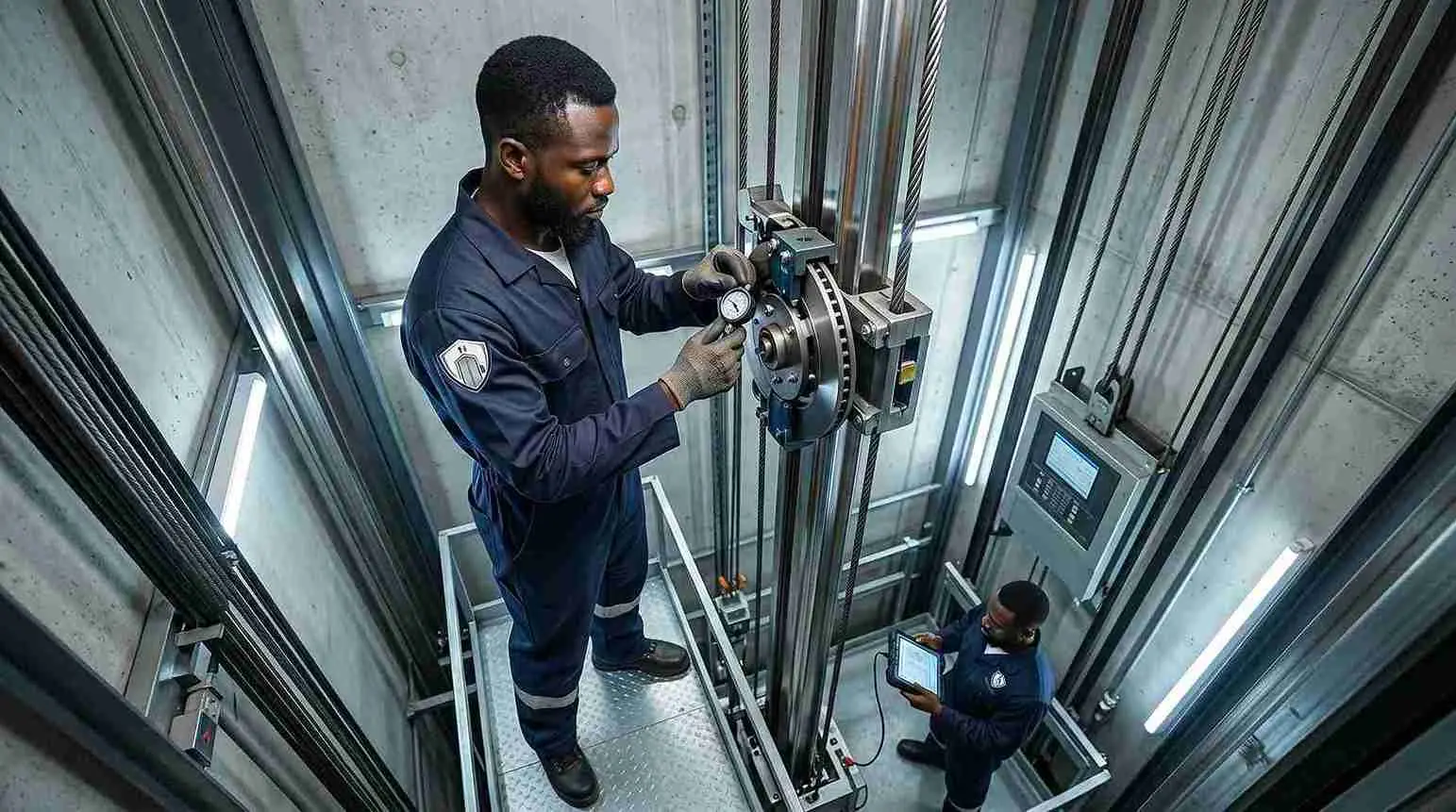

For facility managers, building owners, property managers, and procurement teams in Nigeria, selecting the right elevator maintenance contract is a critical operational decision. The choice between a comprehensive and non-comprehensive Annual Maintenance Contract (AMC) directly impacts your facility’s safety, uptime, and financial planning. This guide breaks down the differences to help you choose the model that best fits your building’s risk profile.
What is a Comprehensive Elevator AMC?
A comprehensive elevator AMC is a full-service maintenance agreement. Under this model, the service provider covers all scheduled preventive maintenance, emergency labor, and the cost of most replacement parts and repairs for a fixed, periodic fee. It is designed to transfer the financial risk of unexpected breakdowns from the building owner to the service provider, ensuring seamless operations.
What is a Non-Comprehensive Elevator AMC?
A non-comprehensive (or semi-comprehensive) elevator AMC covers scheduled preventive maintenance visits and the labor required for those visits and minor adjustments. However, any spare parts, components, or major repairs needed are billed separately as they arise, usually with a pre-agreed discount on the standard service rate.
What Does “Comprehensive” Actually Change?
The core difference is risk allocation and cash flow management. A comprehensive contract changes unpredictable, sporadic repair bills into a fixed, predictable operational expense. It ensures that the financial burden of a sudden component failure does not disrupt the facility’s maintenance budget or require emergency capital expenditure approvals.
Services, Labour, Parts, and Repairs: The Key Differences
In a comprehensive model, routine lubrication, safety checks, and the replacement of standard wear-and-tear items (like buttons, relays, contactors, or door rollers) are fully included. In a non-comprehensive model, while the labor to replace these items might be discounted, the parts themselves are invoiced separately. Major repairs, such as motor rewinding or complete controller replacements, are typically covered in comprehensive plans (subject to specific exclusions) but are always billed as extra in non-comprehensive plans.
How to Compare Total Contract Costs
When comparing costs, look beyond the annual fee. For illustrative purposes, consider a mid-rise commercial building: a comprehensive AMC might have an annual fee 25% to 40% higher than a non-comprehensive AMC. However, if a single major component (like a traction machine controller or variable frequency drive) fails in year two, the out-of-pocket cost for that part under a non-comprehensive contract could easily exceed the total premium paid for the comprehensive contract over its entire three-year term. Always evaluate the total cost of ownership, not just the headline price.
How Equipment Age and Condition Affect Contract Risk
Newer elevators (under 5 years old) are generally under manufacturer warranty and experience fewer failures, making a non-comprehensive AMC a viable, cost-effective option. Conversely, as equipment ages beyond 10 to 15 years, the likelihood of component fatigue and failure increases significantly. For older elevators, a comprehensive elevator AMC mitigates the high financial risk of aging infrastructure.
How Usage Levels and Building Type Affect the Decision
High-traffic environments like hospitals, hotels, and busy commercial towers in Lagos or Abuja cannot afford extended downtime. The operational and reputational cost of a stalled elevator in a hospital far outweighs the premium of a comprehensive contract. Low-usage residential buildings may find non-comprehensive models more economical, provided they maintain a dedicated reserve fund for unexpected repairs.
Which Model Provides More Predictable Maintenance Budgeting?
A comprehensive elevator AMC provides superior budget predictability. Facility managers can lock in maintenance costs for 1 to 3 years, protecting the organization from inflation-driven spare part price hikes and unexpected capital expenditure requests.
What Exclusions Should Facility Managers Carefully Review?
No comprehensive contract covers everything. Facility managers must carefully review exclusions, which commonly include: damage caused by vandalism or negligence, acts of God (like severe flooding or power surges), cosmetic upgrades, and sometimes specific high-value items like main traction ropes or complete controller modernizations. Exact inclusions vary by provider and contract.
What Happens When Major Components Require Replacement?
Under a comprehensive agreement, the provider typically replaces the failed major component at no additional cost, ensuring rapid restoration of service. Under a non-comprehensive agreement, the provider must first submit a quotation for the part and labor. The building owner must then approve the quote and process payment, which can delay repairs and extend passenger downtime.
Evaluating Contract Terms Beyond the Headline Price
Do not choose a vendor based on price alone. Evaluate response time guarantees, the guarantee of genuine OEM parts, the qualifications of the technicians, and the clarity of the termination clause. A slightly higher fee is justified if the provider guarantees a 2-hour emergency response and uses factory-trained engineers.
Can a Non-Comprehensive Contract Be Upgraded Later?
Yes. Most reputable providers allow you to upgrade from a non-comprehensive to a comprehensive AMC. This usually requires a thorough technical audit of the elevator’s current condition to ensure there are no pre-existing, unaddressed major faults before the comprehensive coverage begins.
What Should Be Reviewed Before Renewing an AMC?
Before renewal, review the service provider’s performance metrics: response times, frequency of breakdowns, quality of inspection reports, and transparency in billing. This is also the time to negotiate adjustments based on the elevator’s aging profile and changing building usage.
How PE Lifts Services Helps Building Owners Assess Requirements
As the dedicated maintenance, modernization, and technical support division of PE Lifts Group, PE Lifts Services brings over 15 years of hands-on experience to facilities across Nigeria, Ghana, and Togo. We understand the unique operational demands of West African commercial and residential properties. Our team services all major elevator brands, including OTIS, KONE, Schindler, TK Elevator, Mitsubishi, Fujitec, and Hyundai, utilizing factory-trained technicians and genuine OEM quality components.
We help building owners, facility managers, and procurement teams make informed, data-driven decisions by conducting detailed technical audits. Based on your equipment’s specific age, usage patterns, and current condition, we recommend the most appropriate AMC scope to maximize safety and minimize downtime. Our comprehensive support ecosystem includes regular preventive maintenance visits, 24/7 emergency breakdown support with a guaranteed 2-hour response time in major cities like Lagos and Abuja (and 4-6 hours for other locations), and priority access to a robust inventory of spare parts.
To explore how we can tailor a maintenance strategy for your property, visit our Elevator AMC Nigeria page or review exactly What's Included in an Elevator Maintenance Contract.
Cost and Risk Comparison
The table below outlines the practical differences between the two models. Note that exact inclusions vary by provider and specific contract terms.
| Factor | Comprehensive AMC | Non-Comprehensive AMC |
|---|---|---|
| Preventive maintenance | Included | Included |
| Labour | Included for all repairs | Included for preventive visits only; extra for repairs |
| Spare parts | Most standard parts included | Billed separately (often at a discounted rate) |
| Major repairs | Typically included (subject to exclusions) | Billed separately via quotation |
| Budget predictability | High (fixed annual fee) | Low (variable, unpredictable costs) |
| Financial risk | Transferred to service provider | Retained by building owner |
| Suitable equipment condition | Older equipment or high-usage buildings | Newer equipment under warranty or low-usage |
| Contract considerations | Review exclusions carefully | Ensure clear pricing matrix for spare parts |
AMC Cost and Risk Factors to Consider
Note: To create an editable bar chart in Microsoft Word, select the data in the table below, go to Insert > Chart > Bar, and Word will generate an editable Excel-backed chart. The values below are illustrative examples for explanation only, not PE Lifts Services pricing or measured data.
| Cost/Risk Factor | Comprehensive AMC (Illustrative Index) | Non-Comprehensive AMC (Illustrative Index) |
|---|---|---|
| Annual Base Contract Cost | 85 | 60 |
| Spare Parts Cost (Year 1-3) | 10 | 45 |
| Major Repair Cost (Year 1-3) | 5 | 50 |
| Budget Predictability Score | 90 | 40 |
| Financial Risk to Owner | 20 | 80 |
Practical Decision Framework
Use this framework to guide your procurement decision. No single model is universally superior; the right choice depends on your specific operational context:
- Elevator Age & Condition: Choose comprehensive for equipment over 10 years old or with a history of frequent faults.
- Usage Intensity & Building Type: Hospitals, hotels, and high-rise commercial buildings should prioritize comprehensive AMCs to guarantee uptime.
- Available Maintenance Budget: If your organization requires strict, fixed annual budgets with no variance, comprehensive is the only viable option.
- Risk Tolerance: If the facility can absorb occasional, unexpected repair bills without operational disruption, non-comprehensive may offer short-term savings.
- Spare Parts Requirements: If the elevator uses proprietary or hard-to-source parts, a comprehensive contract ensures the provider is incentivized to keep them in stock.
Frequently Asked Questions (FAQs)
Is comprehensive AMC worth it for a newer elevator?
For newer elevators still under manufacturer warranty, a non-comprehensive AMC is often sufficient, as major parts are already covered. However, a comprehensive plan can still be valuable for guaranteeing priority response and covering non-warranty wear-and-tear items.
Can a contract be upgraded from non-comprehensive later?
Yes. Most providers allow upgrades after conducting a technical audit to assess the elevator's current condition and ensure no pre-existing major faults are present.
What is included in a comprehensive elevator AMC?
It typically includes all scheduled preventive maintenance visits, 24/7 emergency labor, and the cost of most standard spare parts and repairs, excluding specific items like vandalism damage or full modernizations.
Are spare parts included in non-comprehensive AMC?
No. In a non-comprehensive AMC, spare parts are billed separately as they are needed, though providers often offer a discounted rate on parts for AMC clients.
Which AMC is easier to budget for?
A comprehensive elevator AMC is significantly easier to budget for, as it locks in a fixed annual fee, protecting the facility from unpredictable repair costs and inflation.
Does elevator age affect AMC selection?
Yes. Older elevators have a higher statistical probability of component failure, making the risk-transfer and predictable costs of a comprehensive AMC much more advantageous.
What should I check before choosing an AMC contract?
Review the exclusions list, guaranteed response times, the provider's track record with your specific elevator brand, and whether they guarantee the use of genuine OEM parts.
Conclusion
Not sure which contract type fits your equipment age? Ask PE Lifts Services for a risk based assessment of your elevator maintenance requirements. Contact PE Lifts Services today to schedule a technical audit and secure the safety and reliability of your vertical transportation.