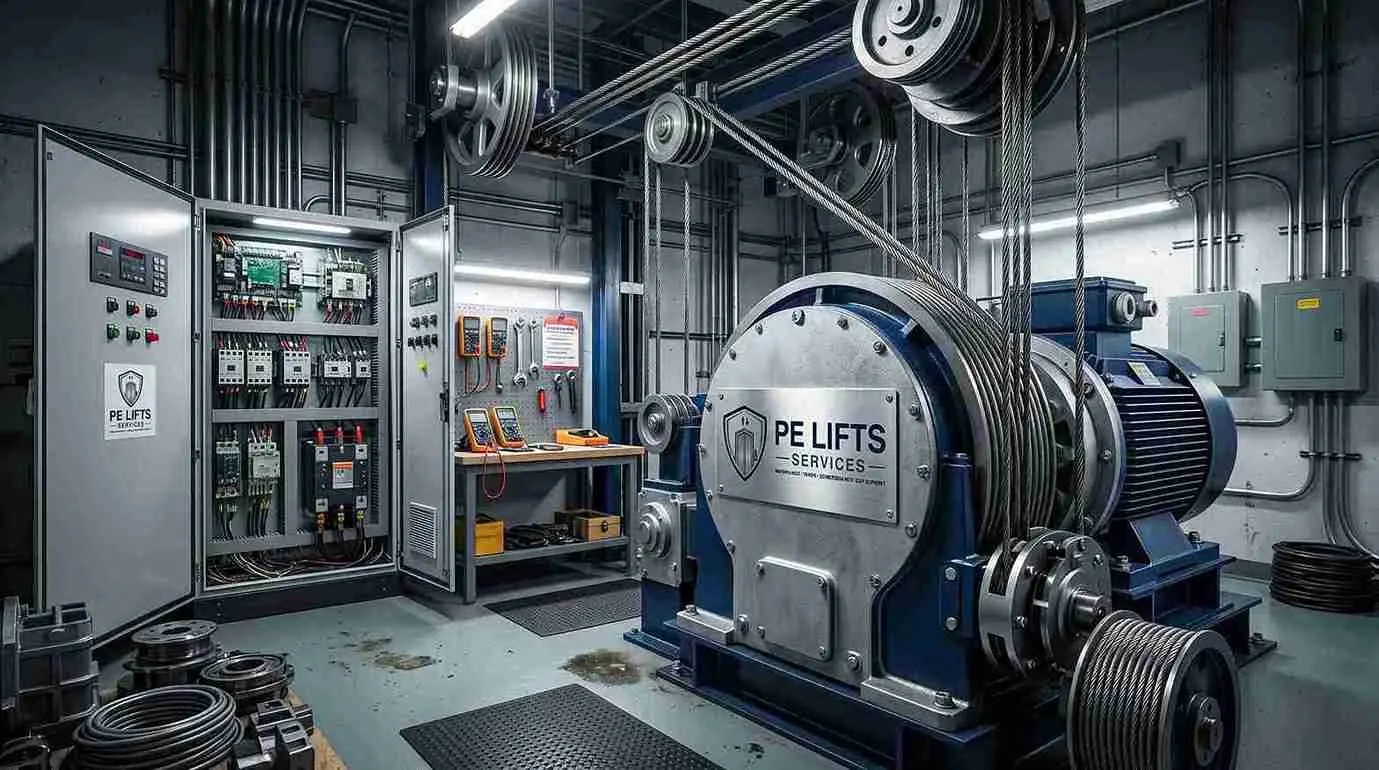

Elevators are vital arteries in multi-story buildings, ensuring smooth and efficient vertical transportation. However, like all mechanical systems, they age, leading to decreased performance, increased breakdowns, and potential safety concerns. Building owners often face a critical decision: should they modernize their existing elevator systems or opt for a complete replacement? This comprehensive guide, informed by insights from PE Lifts Services, West Africa’s trusted partner in elevator maintenance and technical support, delves into this crucial dilemma, focusing on the Nigerian context.
Why Do Elevators Need Upgrades?
Over time, elevator systems can become outdated, impacting their efficiency, reliability, and safety. Older elevators may consume more energy, operate slower, and experience frequent malfunctions, leading to tenant dissatisfaction and increased operational costs. Furthermore, safety standards evolve, and older systems might not comply with the latest regulations, posing risks to passengers [1]. In Nigeria, regulatory bodies like the Standards Organization of Nigeria (SON) are increasingly emphasizing strict adherence to elevator safety standards, with recent directives from the Lagos State government mandating registration and certification of all elevators by March 31, 2026 [2] [3]. This highlights the urgent need for building owners to assess their elevator systems and consider necessary upgrades.
What Is Elevator Modernization?
Elevator modernization involves upgrading specific components or subsystems of an existing elevator rather than replacing the entire unit. This process aims to enhance performance, improve safety, boost energy efficiency, and extend the elevator’s operational lifespan. Modernization can range from minor component replacements to significant overhauls of control systems, door operators, and cabin interiors. PE Lifts Services, for instance, offers comprehensive modernization solutions, including controller upgrades, door system upgrades, cabin modernization, and safety system improvements [4].
Key aspects of modernization often include:
- Control System Upgrades: Replacing outdated relay-based controls with modern microprocessor-based systems for smoother rides, faster response times, and improved energy management.
- Door Operator Modernization: Enhancing door opening and closing mechanisms for increased reliability and passenger safety.
- Cabin Interior Refurbishment: Updating the aesthetics and functionality of the elevator car, including lighting, panels, and flooring.
- Safety Feature Enhancements: Installing new safety devices such as infrared door sensors, emergency communication systems, and improved braking mechanisms.
- Energy Efficiency Improvements: Incorporating regenerative drives and LED lighting to reduce power consumption.
What Is Elevator Replacement?
Elevator replacement, in contrast, involves removing the entire existing elevator system, including the hoistway equipment, car, and often the rails, and installing a brand-new unit. This is a more extensive and costly undertaking, typically reserved for elevators that are beyond repair, structurally unsound, or have reached the end of their practical lifespan. A full replacement provides the opportunity to integrate the latest technological advancements, design innovations, and safety features from the ground up.
How Do Costs Compare?
The financial implications are a primary consideration for building owners. While exact figures can vary widely based on the scope, elevator type, and specific components, a general comparison can be made:
| Factor | Modernization | Replacement |
| Cost | Significantly lower upfront (e.g., $8,000 to $400,000+ depending on scope) [5] | Substantially higher upfront (e.g., $100,000 to $300,000+ per elevator for full modernization, which can be comparable to replacement for extensive projects) [6] |
| Downtime | Shorter, as only specific components are replaced, minimizing disruption to building occupants [7] | Longer, as the entire system is removed and reinstalled, leading to extended periods of elevator unavailability [7] |
| Lifespan | Extends the useful life of the existing elevator by 10-20 years or more [8] | Provides a completely new lifespan, typically 20-30 years or more, depending on maintenance [9] |
| Safety | Significantly improves safety by incorporating modern features and meeting current codes [1] | Ensures the highest level of safety with brand-new, fully compliant systems [9] |
| ROI | High, due to lower initial investment, reduced maintenance costs, improved energy efficiency, and enhanced property value [10] | Can be high for very old or unsafe elevators, offering long-term reliability and efficiency, but with a longer payback period due to higher initial cost [7] |
How Does Modernization Extend Elevator Lifespan?
Modernization is a strategic investment that can significantly prolong an elevator’s operational life. By upgrading critical components such as controllers, motors, and door operators, the system’s overall efficiency and reliability are dramatically improved. For instance, replacing an old hydraulic power unit with a new, energy-efficient model can reduce wear and tear on other components and extend the life of the entire system. Modern control systems also offer better diagnostics, allowing for proactive maintenance and preventing minor issues from escalating into major breakdowns. PE Lifts Services’ modernization efforts focus on performance optimization and safety system improvements, directly contributing to an extended and more reliable elevator lifespan [4].
What Safety Upgrades Can Modernization Deliver?
Safety is paramount in elevator operations, and modernization offers numerous opportunities to enhance passenger protection and compliance with evolving standards. Key safety upgrades include:
- Advanced Door Protection: Installing infrared door sensors that detect obstructions more effectively, preventing doors from closing on passengers or objects.
- Emergency Communication Systems: Upgrading to two-way voice communication systems that connect passengers directly to emergency services or building management.
- Seismic Sensors: For regions prone to seismic activity, installing sensors that automatically move the elevator to the nearest floor and open the doors during an earthquake.
- Overload Protection: Ensuring accurate weight detection to prevent operation when the elevator is overloaded.
- Improved Braking Systems: Enhancing braking mechanisms for smoother stops and added security.
- Fire Service Operation: Integrating features that allow elevators to be used by firefighters during emergencies, as per safety codes.
These upgrades not only protect passengers but also help building owners meet stringent regulatory requirements, such as those enforced by the Standards Organization of Nigeria (SON) [2].
Benefits of Elevator Modernization
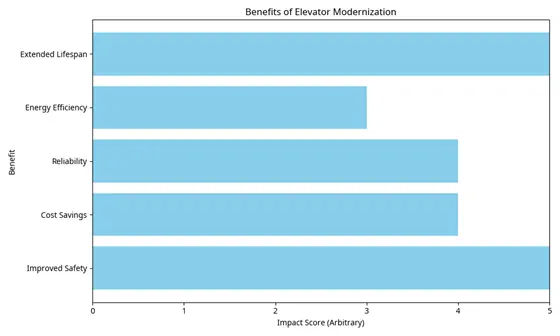
Benefits of Elevator Modernization
Modernization offers a multitude of benefits that extend beyond just safety and lifespan. These include:
- Improved Safety: Enhanced door protection, emergency communication, and compliance with current safety codes.
- Cost Savings: Reduced energy consumption, fewer breakdowns, and lower maintenance costs over time.
- Reliability: Smoother operation, fewer service interruptions, and increased uptime.
- Energy Efficiency: Integration of regenerative drives and LED lighting to significantly cut power usage.
- Extended Lifespan: Prolonging the useful life of the elevator by 10-20 years, delaying the need for full replacement.
When Is Elevator Replacement Necessary?
Despite the many advantages of modernization, there are instances where a complete elevator replacement becomes the more prudent, or even necessary, option. These situations typically arise when:
- Structural Integrity Issues: The elevator’s core structure, including the hoistway or machine room, is compromised or cannot support modern components.
- Obsolete Technology: The existing system is so old that compatible replacement parts are no longer available, making repairs difficult and costly.
- Frequent Breakdowns and High Repair Costs: The elevator experiences constant malfunctions, and the cumulative cost of repairs approaches or exceeds the cost of a new installation.
- Significant Capacity or Speed Requirements: The building’s usage has changed, requiring a much higher capacity or faster speed that the existing infrastructure cannot accommodate, even with modernization.
- Major Code Violations: The elevator has fundamental design flaws that cannot be rectified through modernization to meet current safety codes.
- Aesthetic Overhaul: The building undergoes a complete renovation, and a new elevator is desired to match the new architectural vision.
How Does PE Lifts Services Help Building Owners Decide?
Making the right decision between elevator modernization and replacement requires expert assessment and a thorough understanding of the building’s specific needs, budget, and long-term goals. PE Lifts Services, with over 15 years of experience as a premier elevator service provider across Nigeria, Ghana, and Togo, offers invaluable guidance in this process [11].
Their approach typically involves:
- Initial Assessment: A comprehensive inspection and evaluation of the existing elevator systems to identify current needs, performance issues, and compliance gaps [12].
- Technical Audits: Detailed inspections and reports to ensure compliance with safety standards and regulations, identifying operational risks and equipment condition issues [4].
- Custom Plan Development: Based on the assessment, PE Lifts Services develops tailored recommendations, outlining the most cost-effective and beneficial solution—whether it’s modernization or replacement—that aligns with the client’s operational needs and budget [12].
- Expert Insights: Their certified engineers, factory-trained on multiple major elevator brands, provide expert insights into the latest technologies, safety features, and regulatory requirements, ensuring informed decision-making [11] [4].
Case Studies:
Case Study 1: Lagos Hotel Group – Modernization for Enhanced Guest Experience
A prominent hotel in Lagos faced increasing complaints about slow and frequently malfunctioning elevators, impacting guest satisfaction. A full replacement was deemed too disruptive and costly for their operational schedule. PE Lifts Services conducted a thorough technical audit and recommended a phased modernization plan focusing on control system upgrades, door operator enhancements, and cabin interior refurbishment. The project resulted in significantly smoother and faster rides, reduced downtime, and a noticeable improvement in guest experience, all while minimizing operational disruption. The facility manager, James Okafor, lauded their exceptional response time and technical expertise [11].
Case Study 2: Accra Business Center – Safety and Efficiency Upgrade
An older commercial building in Accra needed to comply with updated safety regulations and improve energy efficiency. The existing elevators were functional but lacked modern safety features and consumed excessive power. PE Lifts Services implemented a modernization program that included advanced infrared door sensors, emergency communication systems, and the installation of energy-efficient regenerative drives. The upgrade not only brought the elevators up to current safety standards but also led to substantial reductions in energy bills, demonstrating a strong return on investment. Sarah Adams, Operations Director, praised the seamless project execution and excellent results [11].
Case Study 3: Abuja Residential Estate – Extending Lifespan and Reliability
Residents of a large residential estate in Abuja were experiencing frequent elevator breakdowns, leading to inconvenience and safety concerns. The elevators were nearing the end of their expected lifespan, but a full replacement for multiple units was financially challenging. PE Lifts Services proposed a comprehensive modernization that involved replacing motors, control panels, and all wear-and-tear components. This extended the elevators’ lifespan by another 15 years, drastically reduced breakdowns, and improved overall reliability, ensuring residents’ peace of mind.
FAQs
1. What is the average cost of elevator modernization in Nigeria?
The cost of elevator modernization in Nigeria varies significantly based on the scope of work, the type of elevator, and the specific components being upgraded. It can range from a few thousand dollars for minor upgrades to hundreds of thousands for extensive overhauls. PE Lifts Services provides tailored quotes after an initial assessment.
2. How long does elevator modernization typically take?
Modernization projects generally have shorter downtime compared to full replacements. The duration depends on the scope, but many projects can be completed within weeks, minimizing disruption to building operations.
3. What are the key benefits of modernizing an old elevator?
Key benefits include improved safety, enhanced reliability, increased energy efficiency, smoother ride quality, extended lifespan of the elevator, and compliance with current building codes and regulations.
4. When should I consider a full elevator replacement instead of modernization?
Full replacement is usually necessary when the elevator’s core structure is compromised, compatible parts are no longer available, the system experiences constant and costly breakdowns, or the building requires a significant increase in capacity or speed that modernization cannot achieve.
5. Does elevator modernization improve energy efficiency?
Yes, modernization often includes upgrading to energy-efficient components like regenerative drives, LED lighting, and modern control systems, which can significantly reduce the elevator’s power consumption.
6. Are there specific safety regulations for elevators in Nigeria?
Yes, elevator safety in Nigeria is regulated by the Standards Organization of Nigeria (SON), which aligns with international guidelines. Recent directives in Lagos State also mandate registration and certification of all elevators [2] [3].
7. How can PE Lifts Services help with my elevator upgrade decision?
PE Lifts Services offers comprehensive initial assessments, technical audits, and custom plan development. Their certified engineers provide expert guidance to help building owners in Nigeria, Ghana, and Togo make informed decisions between modernization and replacement, ensuring optimal safety, performance, and cost-effectiveness.
Conclusion
The decision between elevator modernization and replacement is complex, with significant implications for safety, operational efficiency, and financial outlay. While a complete replacement offers a fresh start, elevator modernization often presents a more cost-effective and less disruptive path to achieving enhanced performance, superior safety, and extended lifespan for existing systems. For building owners in Nigeria and across West Africa, partnering with a knowledgeable and experienced provider like PE Lifts Services is crucial. Their expertise in conducting thorough assessments, developing tailored solutions, and executing upgrades ensures that your vertical transportation systems remain safe, reliable, and efficient for years to come. Don’t wait for breakdowns or non-compliance; contact PE Lifts Services today for a consultation and ensure your elevators are future-ready.