
Vertical transportation is a critical component of modern building infrastructure. In regions like Nigeria and West Africa, where power fluctuations are a reality, ensuring continuous and safe elevator operation is a top priority for building owners, developers, and facility managers. An elevator battery backup system is a vital component of this strategy. This guide explains how these systems work, why they matter, and how to evaluate them for your property.
What Is an Elevator Battery Backup System?
An elevator battery backup is a dedicated power storage system designed to supply temporary electrical power to an elevator’s critical control and safety functions during a mains power failure. Unlike primary power sources, its sole purpose is to ensure the elevator can safely manage passengers and prevent entrapment when the main grid goes down.
Why Does Backup Power Matter for Elevator Systems?
Elevators rely entirely on electricity. A sudden power loss can halt a car between floors, trapping passengers and disrupting building operations. Backup power ensures that essential safety protocols can be executed, protecting both human life and the mechanical integrity of the elevator equipment.
How Do Battery Backup Systems Work?
When the main power supply is interrupted, the elevator’s control system instantly detects the voltage drop. It then seamlessly switches to the elevator battery backup. This system provides a controlled, limited amount of direct current (DC) or inverted alternating current (AC) power, allowing the controller to execute a predefined emergency sequence, such as leveling the car at the nearest floor and opening the doors.
What Is the Difference Between Backup Solutions?
Building owners often confuse different types of backup power. Understanding the distinctions is crucial for proper system design:
- Elevator Battery Backup: Provides short-term, immediate power strictly for emergency lowering, door operation, and safety systems.
- Emergency Lowering Devices (ARD): A specific type of battery backup designed solely to move the car to the nearest landing and open the doors during an outage.
- Uninterruptible Power Supply (UPS): Conditions power and provides short-term backup, often used to protect sensitive elevator control boards from voltage spikes and micro-outages common in West African grids.
- Backup Generators: Provide long-term, high-capacity power to run the entire elevator (including the motor) during extended outages, but they require a few seconds to start and synchronize.
Which Elevator Functions Are Supported During an Outage?
A standard elevator battery backup does not power the main traction motor for normal travel. Instead, it supports critical functions such as:
- Emergency lighting inside the car and shaft.
- Two-way communication systems (intercoms) to contact building security or PE Lifts Services for assistance.
- Alarm bells and indicator panels.
- The automatic rescue device (ARD) to level the car and open the doors.
How Do Backup Systems Help Passengers During Power Failures?
The primary goal of an elevator battery backup is passenger safety and comfort. By powering the emergency lighting and intercom, it prevents panic. By enabling the automatic rescue device, it ensures passengers are not trapped in a dark, stalled car, allowing them to exit safely at the nearest floor.
How Do Capacity, Load, and Design Affect Backup Performance?
The effectiveness of a backup system depends on several variables:
- Battery Capacity: Measured in ampere-hours (Ah), this dictates how long the system can sustain critical functions.
- Elevator Load: A fully loaded car requires more energy to move to the nearest floor than an empty one.
- Travel Requirements: The distance to the nearest landing affects the energy required for the emergency lowering sequence.
- System Design: Gearless traction elevators may have different regenerative and backup requirements compared to hydraulic systems.
How Should Backup Systems Integrate with Control Systems?
Integration must be seamless. The elevator battery backup must be hardwired into the elevator’s main control panel and monitored by the system’s diagnostic software. This ensures the controller knows the battery’s charge status and can trigger the emergency sequence without delay or software conflict.
What Is the Role of Safety Functions Like Lighting and Alarms?
Standards such as EN 81-20 mandate specific safety features during power loss. Emergency lighting ensures visibility, while communication systems allow trapped passengers to call for help. The backup battery ensures these life-safety features remain operational even when the building’s main power is completely severed.
How Should Building Owners Assess Battery Condition and Maintenance?
Batteries degrade over time. Building owners must implement a rigorous maintenance schedule. This includes:
- Visual Inspections: Checking for corrosion, swelling, or leaks.
- Voltage Testing: Measuring the resting and load voltage of the battery bank.
- Simulated Power Failures: Periodically cutting main power to verify the backup system activates and performs the emergency lowering sequence correctly.
- Replacement: Proactively replacing batteries every 3 to 5 years, or as recommended by the manufacturer, before they fail.
What Common Problems Are Caused by Poorly Maintained Batteries?
Neglected batteries can swell, leak acid, or lose their capacity to hold a charge. This leads to "ghost faults" in the elevator controller, failure of the automatic rescue device during a real outage, and ultimately, passenger entrapment.
How Do Nigerian Power Conditions Influence Backup Planning?
In Nigeria and broader West Africa, grid instability and frequent voltage fluctuations are common. Relying solely on a basic battery backup may be insufficient for high-traffic buildings. Facility managers must consider hybrid solutions, such as pairing a robust UPS to protect control electronics from surges, alongside a backup generator for extended outages, ensuring comprehensive protection.
What Should Building Owners Ask Suppliers Before Selecting a Solution?
Before purchasing, ask:
- Does this system comply with local and international elevator safety codes?
- What is the expected battery lifespan under typical West African ambient temperatures?
- Does the system provide diagnostic alerts to the maintenance provider when battery health degrades?
- Is the backup system compatible with our specific elevator model and controller?
Why Should Backup Systems Be Part of the Overall Maintenance Strategy?
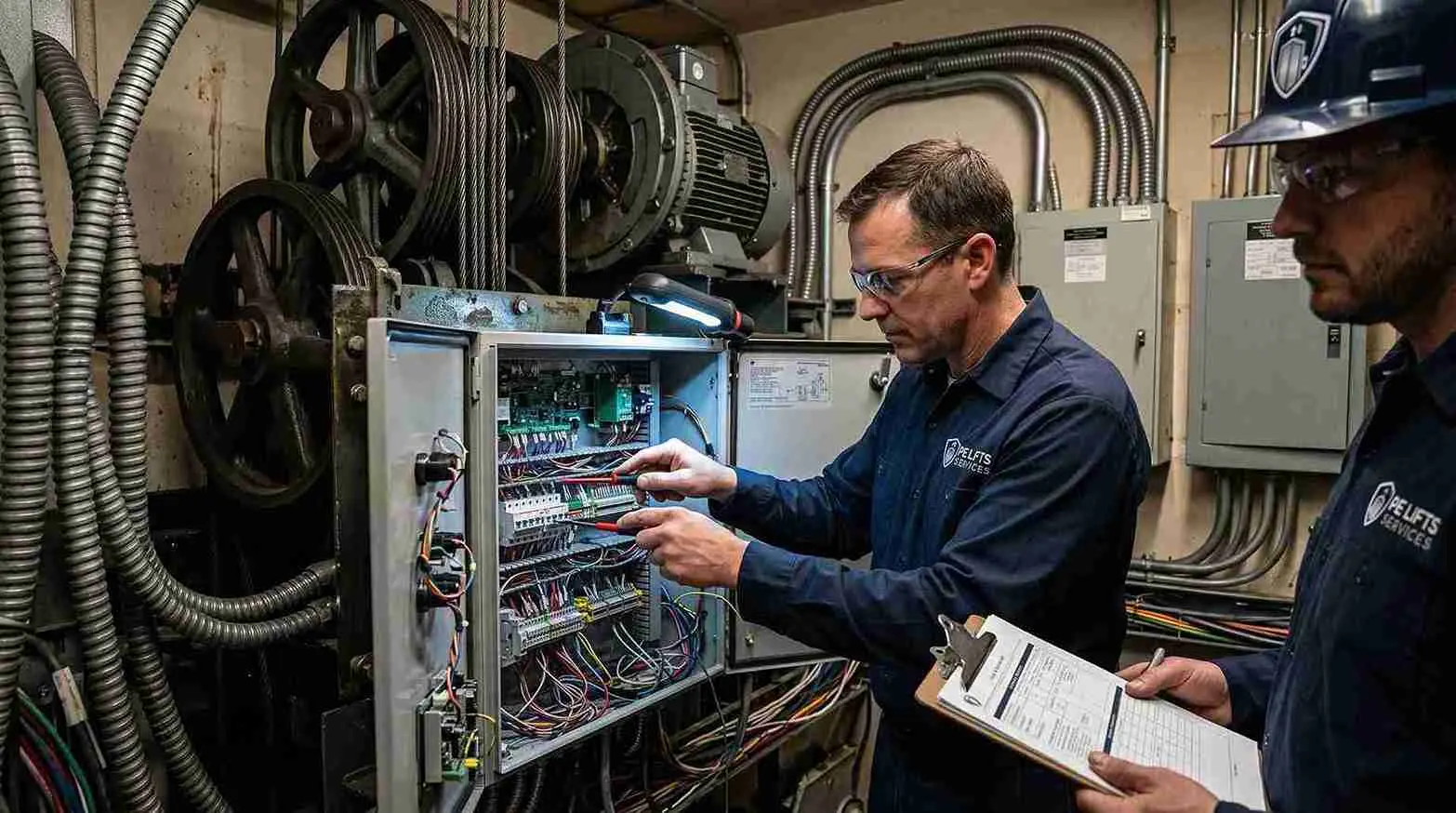
An elevator battery backup is only as reliable as its maintenance. Integrating battery testing into your Annual Maintenance Contract (AMC) ensures that the system is always ready. PE Lifts Services, the dedicated maintenance and technical support division of PE Lifts Group, includes comprehensive backup system evaluations in their preventive maintenance protocols across Nigeria and West Africa.
How Can PE Lifts Services Support Your Elevator Needs?
Whether you require routine maintenance, emergency repairs, system modernization, or a technical assessment of your current backup capabilities, PE Lifts Services provides expert, independent support for all major elevator brands. Their 24/7 emergency response and detailed inspection reports ensure your vertical transportation remains safe, reliable, and compliant.
Comparison of Elevator Backup Power Solutions
| Solution Type | Primary Purpose | Advantages | Limitations | Key Considerations |
|---|---|---|---|---|
| Elevator Battery Backup (ARD) | Emergency lowering and door operation. | Instant activation; no moving parts; protects passengers from entrapment. | Short duration; cannot run the elevator for normal service. | Must be tested monthly; battery replacement required every 3-5 years. |
| Uninterruptible Power Supply (UPS) | Power conditioning and micro-outage protection. | Protects sensitive control boards from voltage spikes and surges. | Limited runtime; not designed for heavy motor loads. | Essential in areas with frequent grid fluctuations. |
| Backup Generator | Long-term power restoration for the whole building. | Can power the elevator motor for continued normal operation. | Takes 10-30 seconds to start; requires fuel and regular engine maintenance. | Requires automatic transfer switches (ATS) and proper ventilation. |
| Hybrid (UPS + Generator) | Comprehensive power security. | Combines instant protection with long-term reliability. | Higher initial capital expenditure and complexity. | Best for hospitals, high-rises, and critical infrastructure. |
FAQs on Elevator Battery Backup
1. What is the primary purpose of an elevator battery backup?
The primary purpose is to provide temporary, immediate power to critical safety functions—such as emergency lighting, alarms, and automatic rescue devices—during a mains power failure, preventing passenger entrapment.
2. How long does an elevator backup battery typically last?
Under normal conditions and with proper maintenance, elevator backup batteries typically last between 3 to 5 years. However, high ambient temperatures, common in parts of West Africa, can reduce this lifespan.
3. Can an elevator battery backup power the elevator for normal use during an outage?
No. Standard battery backups (like Automatic Rescue Devices) only provide enough energy to move the car to the nearest floor and open the doors. For normal operation during an outage, a backup generator is required.
4. How often should elevator backup batteries be tested?
Industry best practices and maintenance standards recommend testing the backup system’s functionality at least once a month by simulating a power failure, alongside routine voltage checks during scheduled maintenance visits.
5. What happens if an elevator battery backup fails during a power outage?
If the battery fails, the elevator will likely stall between floors. Passengers will be trapped until main power is restored or until trained technicians from a service provider like PE Lifts Services arrive to perform a manual rescue.
6. Are elevator battery backups compatible with all elevator brands?
While the concept is universal, the specific hardware and integration methods vary by manufacturer. It is crucial to use approved or compatible components, which is why consulting independent experts like PE Lifts Services is recommended for non-PE Lifts brands.
7. How does Nigerian grid instability affect elevator backup planning?
Frequent voltage spikes and outages mean that a simple battery backup may not be enough. Building owners should consider pairing battery backups with UPS systems to protect sensitive electronics from surge damage, ensuring long-term reliability.
Secure Your Building’s Vertical Transportation
Elevator safety is non-negotiable. An elevator battery backup is a critical investment in the safety of your passengers and the longevity of your equipment. Do not wait for a power failure to discover your system’s vulnerabilities.
Building owners, facility managers, and property developers: ensure your elevator’s emergency systems are robust, compliant, and professionally maintained. Contact PE Lifts Services today to schedule a comprehensive technical assessment, discuss modernization options, or learn more about our tailored Annual Maintenance Contracts (AMC) designed for the unique demands of the Nigerian and West African markets.