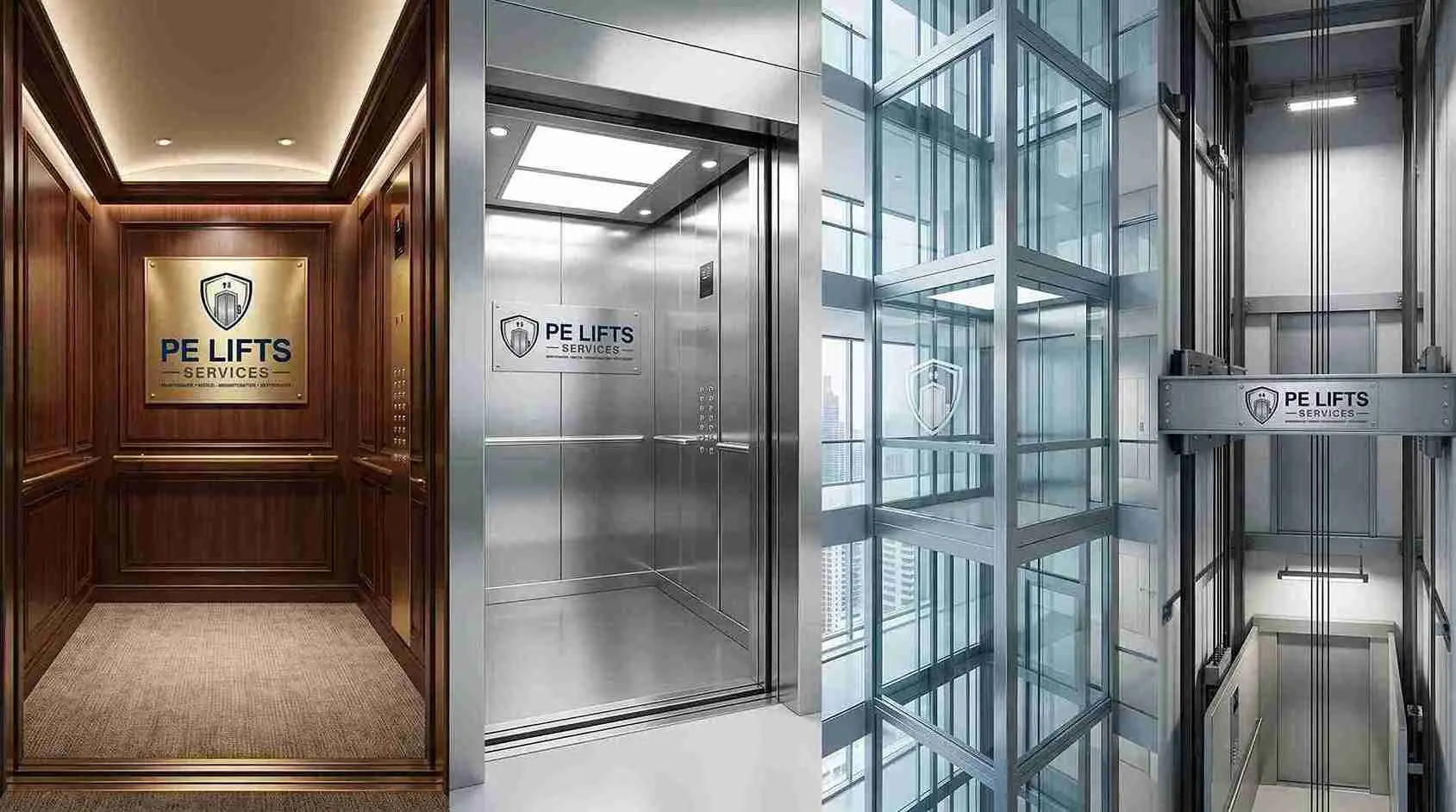

Elevators are critical components of modern buildings, facilitating vertical transportation for residents, employees, and visitors. However, like any complex machinery, they are susceptible to malfunctions and breakdowns. When an elevator stops working, especially with passengers inside, it quickly escalates from an inconvenience to a potentially dangerous emergency. For building owners and facility managers, understanding the nuances of emergency elevator repair is not just about operational efficiency; it’s about ensuring safety, compliance, and the reputation of their property. This comprehensive guide will delve into what constitutes an elevator emergency, common issues, immediate actions to take, the role of professional repair services, and how preventive maintenance can mitigate risks. We will also highlight the expertise of PE Lifts Services in providing reliable emergency support across Nigeria.
What Is an Elevator Emergency?
An elevator emergency is any situation where an elevator malfunctions in a way that poses a direct threat to passenger safety, causes significant operational disruption, or requires immediate professional intervention. This goes beyond minor glitches or routine maintenance needs. It typically involves scenarios where people are trapped, the elevator is not functioning safely, or there’s a risk of further damage or injury. Recognizing these situations promptly is crucial for effective response and minimizing potential harm.
What Are the Most Common Elevator Emergencies?
Elevators, despite their robust design, can encounter various issues that necessitate urgent attention. Understanding these common emergencies helps building owners prepare and respond effectively.
Passenger Entrapment
This is perhaps the most distressing elevator emergency. Passenger entrapment occurs when an elevator car stops unexpectedly between floors, or its doors fail to open, leaving occupants stranded inside. Causes can range from power failures and mechanical breakdowns to control system malfunctions. The primary concern here is the psychological impact on trapped
individuals and, in some cases, potential health risks if the entrapment is prolonged or conditions inside the car are unfavorable.
Door Failures
Elevator doors are complex systems designed for safety and efficiency. Failures can include doors not opening or closing properly, getting stuck, or operating erratically. A door malfunction can prevent passengers from entering or exiting, lead to entrapment, or even pose a physical hazard if doors close unexpectedly on someone. These issues often stem from sensor problems, motor malfunctions, or debris obstructing the door tracks.
Power Outages
Sudden loss of electrical power to a building can immediately halt elevator operations. While most modern elevators are equipped with emergency power systems (like Automatic Rescue Devices - ARD) to bring the car to the nearest floor and open the doors, these systems can sometimes fail or may not be present in older installations. Prolonged power outages can lead to passenger entrapment and significant disruption, especially in high-rise buildings.
Sudden Stoppages
An elevator stopping abruptly between floors, without passengers being trapped, is still a serious emergency. It indicates a significant underlying issue, such as a fault in the braking system, motor, or control circuits. While not immediately life-threatening like entrapment, it can cause panic and suggests a severe mechanical or electrical problem that requires immediate diagnosis and repair to prevent more critical failures.
Control System Faults
The control system is the brain of the elevator, managing its movement, door operations, and safety features. Faults in this system can manifest in various ways, including erratic car movement, incorrect floor leveling, unresponsive buttons, or complete operational shutdown. These faults can be complex to diagnose and often require specialized technical expertise to resolve.
Common Emergency Elevator Issues
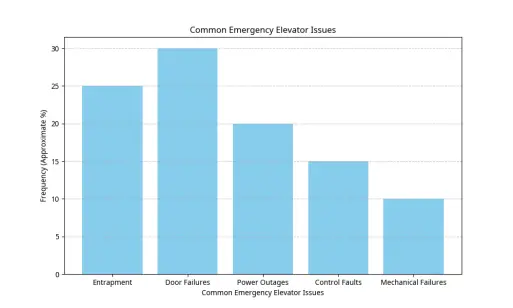
The chart above illustrates the most common emergency elevator issues encountered in commercial and residential buildings. The data is based on industry trends and common service call reports.
Common Emergency Elevator Issues (Data Table for Reference):
| Issue | Frequency (Approximate %) |
| Entrapment | 25% |
| Door Failures | 30% |
| Power Outages | 20% |
| Control Faults | 15% |
| Mechanical Failures | 10% |
Note: The data provided in the table above can be used to create an editable chart in programs like Microsoft Excel or Google Sheets.
What Should You Do During an Elevator Emergency?
Responding correctly during an elevator emergency is paramount for passenger safety and efficient resolution. Building owners and their staff should have clear protocols in place, and passengers should be educated on appropriate actions.
Immediate Safety Actions
For passengers inside a malfunctioning elevator:
Stay Calm: Panic can worsen the situation. Reassure others and avoid attempting to force open doors or exit the car.
Use the Alarm Button and Intercom: Press the alarm button to alert building management or a monitoring service. Use the intercom (if available) to communicate with them. Clearly state your location and the nature of the emergency.
Wait for Help: Professional rescuers are trained to handle these situations safely. Do not try to escape the elevator on your own.
For building staff:
Verify the Emergency: Confirm the elevator’s status and location. If passengers are trapped, establish communication.
Do Not Attempt Rescue: Unless specifically trained and equipped, building staff should not attempt to rescue trapped passengers. This can be extremely dangerous and should be left to qualified elevator technicians or emergency services.
Contact Qualified Technicians
As soon as an emergency is identified, the priority is to contact a reputable emergency elevator repair service. These services, like PE Lifts Services, offer 24⁄7 support and have the expertise and equipment to handle critical breakdowns. Provide them with all available information about the elevator’s status, location, and any communication with trapped passengers.
Secure the Area
While waiting for technicians to arrive, building staff should secure the area around the affected elevator. This includes:
Blocking Access: Place warning signs and physical barriers to prevent anyone from using the elevator or approaching the shaft.
Informing Occupants: Communicate the situation to building occupants, advising them to use alternative stairs or elevators.
Assisting Emergency Services: Be prepared to guide technicians and emergency personnel to the elevator’s location quickly upon their arrival.
How Do Professional Emergency Repair Services Respond?
Professional emergency elevator repair services are equipped to handle the complexities of elevator breakdowns with speed and precision. Their response typically follows a structured process to ensure safety and efficient restoration of service.
Fault Diagnosis
Upon arrival, qualified technicians will conduct a thorough diagnosis of the elevator system. This involves:
Safety First: Ensuring the safety of trapped passengers (if any) and the surrounding environment.
Systematic Inspection: Checking the control panel, mechanical components, electrical systems, and safety circuits.
Utilizing Diagnostic Tools: Employing specialized tools and software to pinpoint the exact cause of the malfunction.
Safe Repairs
Once the fault is identified, technicians proceed with repairs. This is a critical phase that requires specialized knowledge and adherence to strict safety protocols. Repairs can range from minor adjustments to complex component replacements. The goal is not just to get the elevator running again, but to ensure it operates safely and reliably.
System Testing
After repairs are completed, the elevator undergoes rigorous testing to confirm its functionality and safety. This includes:
Operational Checks: Running the elevator through its full range of operations, including door functions, leveling, and emergency stops.
Safety Feature Verification: Testing all safety mechanisms, such as emergency brakes, interlocks, and communication systems.
Load Testing: In some cases, testing with simulated loads to ensure performance under various conditions.
Only after passing all tests and receiving a clean bill of health from the technicians should the elevator be returned to service.
How Can Preventive Maintenance Reduce Emergencies?
The adage “prevention is better than cure” holds particularly true for elevators. Regular elevator maintenance is the most effective strategy for minimizing the occurrence of emergencies and extending the lifespan of the equipment. PE Lifts Services emphasizes the importance of proactive maintenance to ensure optimal performance and safety.
Routine Inspections
Scheduled routine inspections are the cornerstone of preventive maintenance. During these inspections, technicians systematically examine all critical components of the elevator system, including:
Mechanical Components: Ropes, sheaves, brakes, motors, and guide rails. Electrical Systems: Wiring, control panels, circuit boards, and safety switches.
Safety Features: Door sensors, emergency stop buttons, alarm systems, and communication devices.
Lubrication and Cleaning: Ensuring all moving parts are properly lubricated and the system is free from debris that could impede operation.
These inspections help identify potential issues before they escalate into major breakdowns, allowing for timely repairs or adjustments.
AMC Benefits
An Annual Maintenance Contract (AMC) with a reputable elevator maintenance company Nigeria like PE Lifts Services offers numerous benefits:
Predictable Costs: AMCs typically cover routine maintenance and often include certain repairs or parts, helping building owners budget effectively and avoid unexpected large expenses.
Extended Equipment Lifespan: Regular servicing and timely replacement of worn parts significantly extend the operational life of the elevator.
Enhanced Safety: Consistent checks and adherence to safety standards reduce the risk of malfunctions that could endanger passengers.
Priority Response: AMC clients often receive priority response times for emergency calls, ensuring quicker resolution of critical issues.
Compliance: Ensures the elevator system complies with local safety regulations and industry standards.
Early Fault Detection
One of the most significant advantages of preventive maintenance is the early detection of faults. Technicians are trained to recognize subtle signs of wear, tear, or impending failure that might go unnoticed by untrained personnel. Addressing these minor issues proactively prevents them from developing into serious emergencies, saving time, money, and potential hazards.
| Emergency | Immediate Action | Long-Term Solution |
| Entrapment | Stay calm, use alarm/intercom, wait for help | Regular AMC, prompt repairs, modern safety features |
| Door Failure | Do not force doors, use alarm/intercom | Routine door mechanism checks, sensor calibration, component replacement |
| Power Failure | Use alarm/intercom, wait for emergency power to activate | Ensure functional ARD, regular battery checks, backup generator |
| Control Fault | Use alarm/intercom, wait for technicians | Comprehensive control system diagnostics, software updates, component upgrades |
How Does PE Lifts Services Provide24⁄7 Emergency Support?
PE Lifts Services understands that elevator emergencies can occur at any time, posing significant risks and disruptions. That’s why they are committed to providing robust 24⁄7 emergency elevator repair services across Nigeria. Their approach is built on a foundation of rapid response, technical expertise, and a customer-centric focus.
Dedicated Emergency Line: PE Lifts Services operates a dedicated emergency hotline, ensuring that building owners and facility managers can reach qualified personnel
immediately, day or night. This direct line of communication is crucial for initiating a swift response.
Rapid Deployment Teams: Strategically located technical teams are on standby, equipped with the necessary tools and spare parts to be dispatched quickly to emergency sites. Their goal is to minimize downtime and ensure the safety of any trapped passengers.
Experienced Technicians: All PE Lifts Services technicians are highly trained and certified, possessing in-depth knowledge of various elevator systems and brands. This expertise allows for accurate fault diagnosis and efficient, safe repairs.
Advanced Diagnostic Tools: They utilize state-of-the-art diagnostic equipment to quickly identify the root cause of complex elevator malfunctions, streamlining the repair process.
Comprehensive Spare Parts Inventory: Maintaining a well-stocked inventory of genuine spare parts is vital for rapid repairs. PE Lifts Services ensures availability of critical components to avoid delays.
Structured Escalation Process: For highly complex or prolonged emergencies, PE Lifts Services has an internal escalation process, bringing in senior engineers and specialists to ensure every challenge is met with the highest level of expertise.
Case Studies
To illustrate the impact of reliable emergency elevator repair, consider these realistic scenarios:
Case Study 1: Commercial High-Rise in Lagos
A prominent commercial high-rise in Victoria Island, Lagos, experienced a complete shutdown of one of its main passenger elevators during peak business hours. Multiple occupants were trapped across different floors. The building management immediately contacted PE Lifts Services. Within 30 minutes, a rapid response team was on-site. Utilizing advanced diagnostics, they quickly identified a critical control board failure. The team worked efficiently, safely extricating all trapped passengers and then replacing the faulty component. The elevator was fully operational within 4 hours, minimizing disruption to business operations and ensuring tenant safety. This swift action prevented potential panic and significant financial losses due to prolonged downtime.
Case Study 2: Hotel in Abuja
Late one evening, a luxury hotel in Abuja reported a guest elevator stuck between floors with several guests inside. The hotel’s reputation for excellent service was at stake. PE Lifts Services’ emergency team arrived within the promised 2-hour window. They calmly communicated with the trapped guests, ensuring their comfort while simultaneously diagnosing
the issue – a minor mechanical misalignment causing the safety brakes to engage. The technicians skillfully realigned the components, released the brakes, and brought the elevator to the nearest floor. Guests were safely evacuated, and after thorough testing, the elevator was back in service before morning, preserving the hotel’s guest experience and operational flow.
Case Study 3: Residential Estate in Port Harcourt
During a heavy rainstorm in Port Harcourt, a residential estate experienced a power surge that affected one of its residential elevators, causing it to stop abruptly and trapping a family. The estate management, having an AMC with PE Lifts Services, called their emergency line. Despite challenging weather conditions, the PE Lifts Services team mobilized and reached the site within 3 hours. They found that the power surge had tripped several safety circuits and caused a temporary communication fault. After resetting the system and conducting comprehensive checks for any residual damage, the family was safely released, and the elevator was restored to full functionality. The quick response and technical proficiency ensured the residents’ safety and peace of mind during a stressful event.
SEO-Focused FAQs
Q1: What is the typical response time for emergency elevator repair services in Nigeria?
A1: Reputable emergency elevator repair companies in Nigeria, like PE Lifts Services, aim for rapid response times, often within 2-4 hours for critical facilities like hotels and hospitals, and within 12-24 hours for commercial and residential buildings, depending on the service level agreement.
Q2: How can I prevent frequent elevator breakdowns in my building?
A2: The most effective way to prevent frequent breakdowns is through a comprehensive elevator maintenance company Nigeria plan, such as an Annual Maintenance Contract (AMC). Regular inspections, timely servicing, and proactive replacement of worn parts significantly reduce the likelihood of emergencies.
Q3: What should I do if I am trapped in an elevator?
A3: If you are trapped in an elevator, remain calm. Press the alarm button and use the intercom to communicate with building management or the emergency service provider. Do not attempt to force the doors open or exit the elevator on your own. Wait for trained professionals to assist you.
Q4: Are all elevator repair companies equipped for24⁄7 emergency services? A4: Not all companies offer 24⁄7 emergency elevator repair. It is crucial for building owners to partner with a provider like PE Lifts Services that explicitly offers round-the-clock emergency support with dedicated teams and resources.
Q5: What are the benefits of an Annual Maintenance Contract (AMC) for elevators?
A5: An AMC provides numerous benefits, including predictable maintenance costs, extended elevator lifespan, enhanced safety through regular checks, priority response for emergencies, and assurance of compliance with safety standards. It’s a proactive approach to elevator management.
Q6: How do emergency elevator technicians diagnose faults?
A6: Emergency elevator technicians use a combination of systematic inspection, advanced diagnostic tools, and their extensive experience to pinpoint the exact cause of a malfunction. They check control panels, mechanical components, electrical systems, and safety circuits.
Q7: Why is it important to choose a local elevator maintenance company Nigeria?
A7: Choosing a local company ensures faster response times for both routine maintenance and emergencies. Local providers like PE Lifts Services have a better understanding of regional operational challenges, regulations, and can offer more personalized and efficient service.
Conclusion
Effective management of elevator systems is a cornerstone of building safety and operational efficiency. For building owners, understanding the critical nature of emergency elevator repair and implementing robust preventive maintenance strategies are indispensable. From recognizing common emergencies like passenger entrapment and door failures to knowing the immediate safety actions and the structured response of professional services, preparedness is key.
PE Lifts Services stands as a reliable partner in Nigeria, offering comprehensive elevator repair services Nigeria and elevator maintenance company Nigeria solutions, including dedicated 24⁄7 emergency elevator repair support. Their commitment to rapid response, technical expertise, and proactive maintenance ensures that your building’s vertical transportation systems remain safe, efficient, and compliant.
Don’t wait for an emergency to strike. Secure the safety and reliability of your elevators today. Contact PE Lifts Services for a comprehensive Annual Maintenance Contract or to learn more about their emergency support solutions. Your building’s safety and your occupants’ peace of mind are their priority.