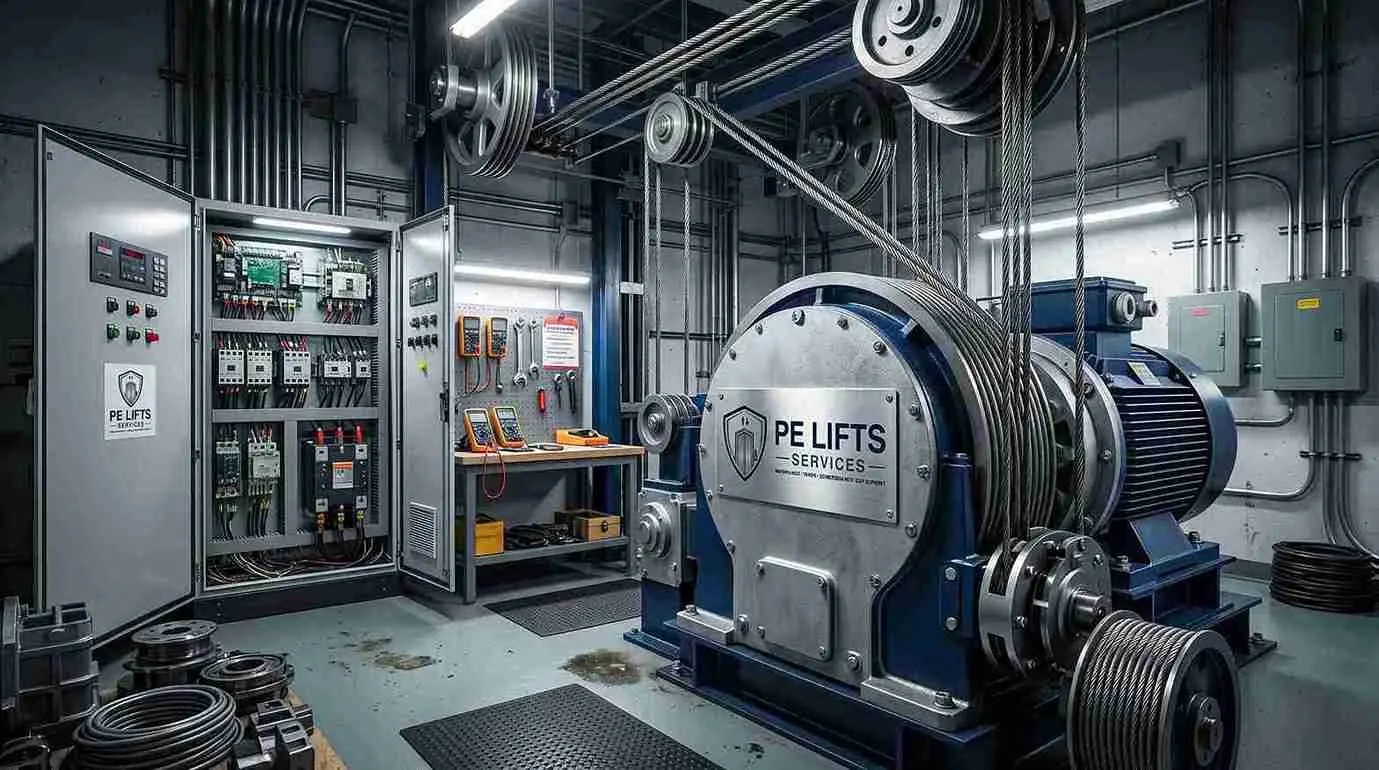

Elevators are the vertical lifelines of any multi-story building. When they function seamlessly, they go unnoticed. But when they fail, they disrupt operations, frustrate occupants, and pose serious safety risks. At the heart of reliable vertical transportation is a competent elevator maintenance contractor. If your building is experiencing frequent downtime, rising repair costs, or poor communication, it may be time to evaluate your current provider.
This guide outlines the critical warning signs of an underperforming elevator maintenance company, the key performance metrics you should track, and how to choose the best elevator maintenance company for your property.
Why Does Choosing the Right Elevator Maintenance Contractor Matter?
Selecting the right elevator maintenance contractor is not just about fixing broken cables or lubricating rails; it is about safeguarding your asset, ensuring passenger safety, and protecting your bottom line. A proactive commercial elevator maintenance strategy prevents minor issues from escalating into catastrophic failures.
When you partner with a reliable elevator AMC services provider, you gain predictable operating costs, extended equipment lifespan, and compliance with local safety regulations. Conversely, a subpar contractor can lead to increased liability, tenant dissatisfaction, and premature capital expenditure for full system replacements. Evaluating elevator maintenance providers systematically ensures your vertical transportation infrastructure supports your building’s operational goals.
What Warning Signs Should You Never Ignore?
If you are wondering about the signs you need a new elevator maintenance contractor, watch for these critical red flags:
- Frequent breakdowns despite regular servicing: If your elevators are consistently out of order even after scheduled maintenance visits, the contractor is likely addressing symptoms rather than root causes.
- Slow response to emergency calls: Passenger entrapment or critical failures require immediate action. A delay in elevator repair services indicates poor resource allocation or inadequate staffing.
- Missed maintenance visits: Consistent rescheduling or skipped preventive maintenance visits violate the core agreement of your Annual Maintenance Contract (AMC) and compromise safety.
- Poor communication and reporting: You should receive detailed, transparent reports after every visit. Vague invoices or unreturned calls are major warning signs.
- Repeated repairs for the same fault: If the same component fails multiple times within a short period, it suggests improper diagnosis or the use of substandard replacement parts.
- Lack of preventive maintenance: A true commercial elevator AMC provider focuses on preventing failures. If your contractor only shows up when something breaks, they are operating as a repair service, not a maintenance partner.
- Poor safety practices: Technicians should strictly adhere to safety protocols, including proper lockout/tagout procedures and the use of personal protective equipment (PPE).
- Limited technical expertise: Modern elevators feature complex microprocessor controls. If your contractor lacks certified engineers trained on your specific elevator brand, they cannot provide adequate commercial elevator maintenance.
Which Performance Metrics Should You Track?
To objectively assess your elevator maintenance contractor, track these key performance indicators (KPIs):
- Response time: The elapsed time between an emergency call and the technician’s arrival on-site.
- First-time fix rate: The percentage of service calls resolved during the initial visit without requiring follow-up trips or special-order parts.
- Equipment uptime: The percentage of time your elevators are fully operational and available for passenger use (industry standard is 98%+).
- Preventive maintenance completion rate: The ratio of scheduled preventive maintenance visits successfully completed on time.
- Safety compliance: Adherence to national and international elevator safety codes (e.g., EN 81, ASME A17.1) during inspections.
- Customer satisfaction: Feedback from building occupants and facility managers regarding elevator reliability and technician professionalism.
- Mean time between failures (MTBF): The average operational time between consecutive elevator breakdowns. A declining MTBF indicates deteriorating maintenance quality.
When Should You Consider Switching Providers?
Switching elevator maintenance companies is a significant decision, but it becomes necessary when your current provider consistently fails to meet baseline expectations. Consider making a change if you experience:
- Consistent SLA failures: Repeated breaches of Service Level Agreement (SLA) terms, particularly regarding response times and uptime guarantees.
- Rising maintenance costs: Unexplained increases in AMC fees or excessive "out-of-scope" repair charges that inflate your operational budget.
- Poor documentation: Incomplete or missing maintenance logs, which can void equipment warranties and complicate regulatory inspections.
- Inadequate technical support: Lack of access to specialized diagnostic tools or manufacturer-trained engineers for complex troubleshooting.
- Lack of transparency: Reluctance to explain repair necessities, provide detailed invoices, or offer modernization recommendations.
Performance Comparison: Reliable vs. Poor Contractor
| Performance Indicator | Reliable Contractor | Poor Contractor |
|---|---|---|
| Response Time | Guaranteed < 2 hours for emergencies | Unpredictable, often > 4 hours |
| Equipment Uptime | Consistently > 98% | Frequent, prolonged downtime |
| Preventive Maintenance | Scheduled, documented, and thorough | Skipped, rushed, or checklist-only |
| Communication | Proactive updates and detailed reports | Reactive, vague, or unresponsive |
| Safety Compliance | Strict adherence to all safety codes | Cutting corners, failed inspections |
Top Reasons Building Owners Change Maintenance Contractors
(Note: The downloadable .docx file includes this data formatted as a table. Simply select the table in Word, go to Insert > Chart > Bar Chart to instantly generate a fully editable bar chart.)
- Slow Response Times (35%)
- Frequent Breakdowns (25%)
- Poor Communication (20%)
- Rising Costs (15%)
- Inconsistent Maintenance (5%)
How Does PE Lifts Services Deliver Reliable Elevator Maintenance?
When evaluating elevator maintenance providers, it is essential to partner with a company that combines technical expertise with a deep commitment to customer service. As the dedicated maintenance and technical support division of PE Lifts Group, PE Lifts Services stands out as a premier elevator maintenance company in West Africa.
With over 15 years of experience, PE Lifts Services provides comprehensive elevator AMC services across Nigeria, Ghana, and Togo. Our approach is built on three core pillars:
- Rapid Emergency Response: We guarantee a 2-hour response time for emergency calls in major cities like Lagos, Abuja, Accra, and Lomé, and 4–6 hours for other locations, ensuring minimal disruption.
- Certified Technical Expertise: Our team consists of highly trained, certified engineers equipped to handle preventive maintenance, complex elevator repair services, and full-scale modernizations for hotels, hospitals, banks, and commercial buildings.
- Transparent, Proactive Care: Our Annual Maintenance Contracts include detailed inspection reports, priority service, safety checks, and discounted rates on spare parts, ensuring you always know the exact health of your vertical transportation assets.
Real-World Impact: Case Studies in Improved Reliability
Case Study 1: Commercial Office Tower in Lagos
A 15-story commercial building experienced chronic elevator downtime, with a Mean Time Between Failures (MTBF) of just 12 days. After switching to PE Lifts Services, our engineers conducted a comprehensive audit, replaced worn traction components, and implemented a strict preventive maintenance schedule. Within six months, equipment uptime improved to 99.2%, and tenant complaints dropped to zero.
Case Study 2: Regional Hospital in Accra
A busy medical facility required absolute reliability for patient transport. Their previous contractor had a 6-hour average emergency response time. PE Lifts Services stepped in, providing a customized hospital-grade AMC with 24/7 priority support. We reduced the emergency response time to under 90 minutes and achieved a 100% first-time fix rate for critical control board issues.
Case Study 3: Luxury Hotel in Lomé
Facing rising, unpredictable maintenance costs, the hotel management sought a transparent commercial elevator AMC provider. PE Lifts Services implemented a fixed-cost AMC that included all routine parts and labor. This eliminated surprise repair bills, reduced annual maintenance expenditure by 18%, and restored the seamless guest experience expected of a five-star property.
Frequently Asked Questions
1. What are the most common signs you need a new elevator maintenance contractor?
The most common signs include frequent breakdowns despite regular servicing, slow emergency response times, missed preventive maintenance visits, poor communication, and repeated repairs for the same fault.
2. How do I choose the best elevator maintenance company for my building?
To choose the best provider, evaluate their response time guarantees, technician certifications, transparency in reporting, and track record with similar building types (e.g., hospitals, high-rise offices). Always review their SLA terms carefully.
3. What should be included in a comprehensive elevator AMC agreement?
A robust Annual Maintenance Contract (AMC) should include scheduled preventive maintenance visits, 24/7 emergency breakdown support, detailed inspection reports, lubrication, safety checks, and discounted rates on spare parts.
4. How quickly should an elevator maintenance contractor respond to an emergency?
Industry best practice dictates a response time of under 2 hours for passenger entrapment or critical failures in major metropolitan areas. PE Lifts Services guarantees a 2-hour response in cities like Lagos, Abuja, Accra, and Lomé.
5. Can switching elevator maintenance companies void my equipment warranty?
No, as long as the new elevator maintenance contractor employs certified technicians, uses approved replacement parts, and meticulously documents all preventive maintenance activities in compliance with the manufacturer’s guidelines.
6. What is the difference between preventive maintenance and corrective repair services?
Preventive maintenance involves scheduled inspections and adjustments to prevent failures before they occur. Corrective elevator repair services are reactive, addressing issues only after a breakdown has already happened.
7. How often should commercial elevators undergo preventive maintenance?
High-traffic commercial elevators should undergo preventive maintenance at least once a month. Hospitals and luxury residential buildings may require bi-weekly visits to ensure optimal performance and safety.
Conclusion
Recognizing the warning signs of an underperforming elevator maintenance contractor is the first step toward protecting your building’s safety, efficiency, and value. Frequent breakdowns, slow response times, and poor communication are not just inconveniences; they are liabilities. By tracking the right performance metrics and knowing when to make a change, you can secure a proactive maintenance partner who prioritizes reliability and long-term cost savings.
Don’t compromise on vertical transportation safety. If your current provider is falling short, it is time to upgrade to a trusted partner. Contact PE Lifts Services today for a comprehensive maintenance assessment. Discover how our expert elevator AMC services, rapid response teams, and certified engineers can transform your building’s elevator performance across Nigeria, Ghana, and Togo.