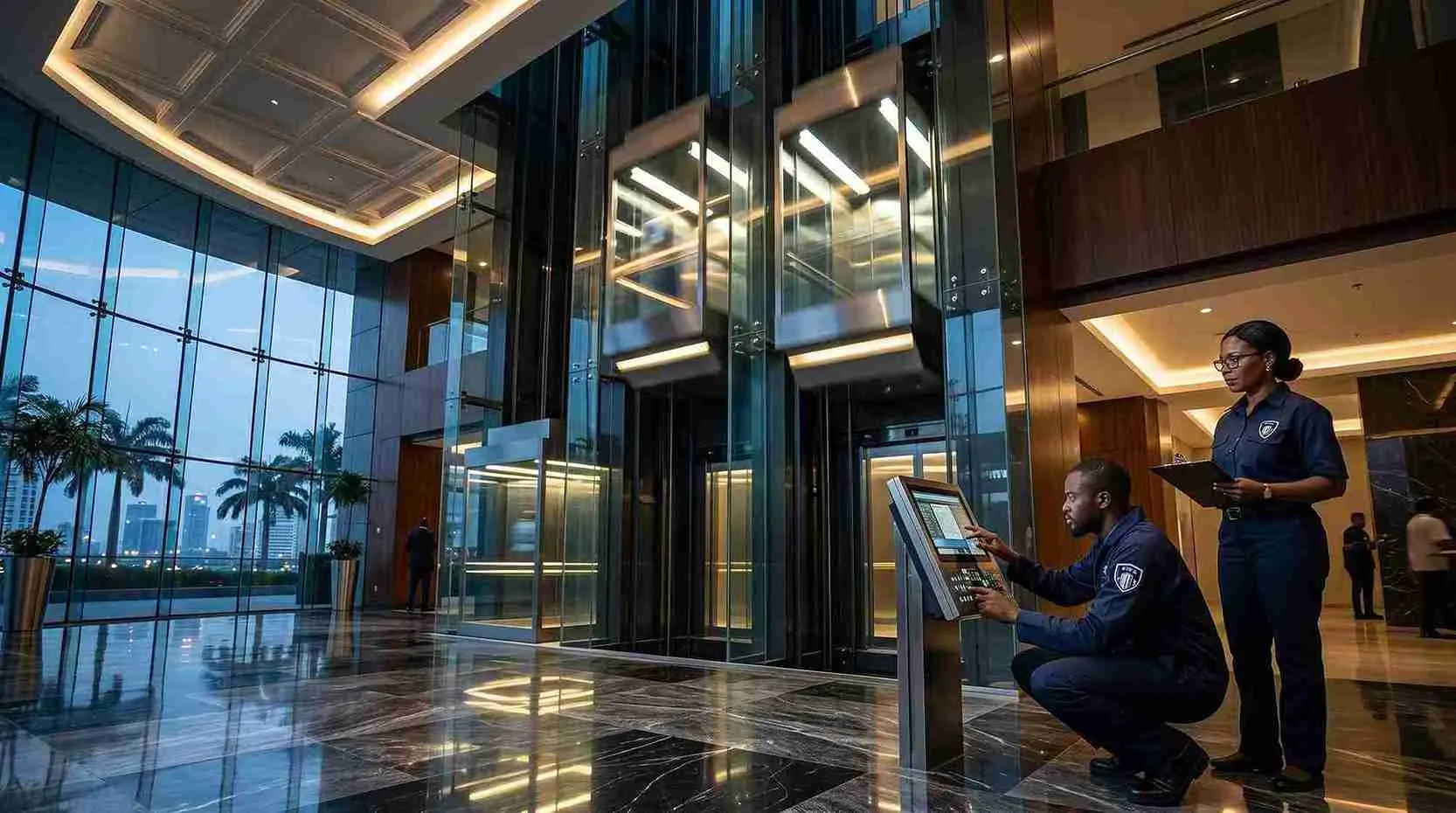

When an elevator malfunctions, the immediate priority is passenger safety and the restoration of vertical access. Professional elevator repair in Nigeria involves a systematic process of diagnosis, parts sourcing, and technical rectification performed by qualified technicians. Building owners should expect a thorough assessment to identify the root cause of the fault, followed by a transparent quotation for labor and components.
It is critical to distinguish between emergency situations—such as passenger entrapment or unsafe mechanical behavior—and routine operational faults. While a flickering light may be scheduled for repair, a door that fails to close securely requires immediate professional intervention. Attempting to bypass safety devices or force doors open can lead to severe injury and further equipment damage.
Why Do Buildings Need Elevator Repair Services?
Elevators are complex electro-mechanical systems subject to wear, environmental factors, and usage intensity. Common reasons for repair requests include:
- Unexpected Stops: The car halts between floors due to safety circuit interruptions or power fluctuations.
- Door Malfunctions: Doors fail to open or close, often caused by sensor misalignment, track obstructions, or motor faults.
- Unusual Noises or Vibration: Grinding, squeaking, or excessive shaking indicates mechanical wear in guides, rollers, or the traction machine.
- Inconsistent Levelling: The car stops above or below the floor level, creating a trip hazard and indicating brake or control system issues.
- Control Faults: Buttons become unresponsive, or the display shows error codes.
- Water Ingress: Floods or leaks can damage electrical components in the pit or machine room.
Symptoms visible to users rarely reveal the underlying technical cause. For instance, a door fault may stem from a simple sensor issue or a complex controller failure. Only a qualified technician can perform the necessary diagnostic tests to ensure the repair addresses the root problem. For more insights on typical issues, see our guide on common elevator breakdowns in Nigeria.
When Should You Call an Elevator Repair Technician?
Deciding when to call for help depends on the severity of the fault.
Urgent Safety Incidents:
- Passenger entrapment.
- Uncontrolled movement or sudden drops.
- Smoke, burning smells, or visible sparks.
- Doors that remain open while the car is moving.
In these cases, do not attempt to force doors or exit the shaft. Use the emergency alarm or phone inside the car and contact your service provider immediately.
Non-Emergency Faults:
- Intermittent button failures.
- Minor lighting issues.
- Occasional noise.
Even for non-emergencies, continued operation should only proceed after a safety assessment. Running a faulty elevator can exacerbate damage, leading to more expensive repairs later. Understanding the cost of elevator downtime for facility managers can help prioritize these decisions.
What Happens During an Elevator Repair Diagnosis?
A professional diagnostic process generally follows these steps:
- Fault Recording: The technician records the reported symptoms and error codes from the controller.
- Safety Check: Immediate verification that no passengers are trapped and the site is safe.
- History Review: Examination of previous maintenance logs to identify recurring issues.
- Physical Inspection: Visual and manual inspection of mechanical and electrical components.
- Testing: Operational tests to replicate the fault under controlled conditions.
- Root Cause Identification: Determining whether the issue is mechanical, electrical, or software-related.
- Scope Definition: Outlining the required parts and labor for the repair.
- Repair and Commissioning: Completing the work and performing safety checks before returning the lift to service.
This structured approach ensures that repairs are effective and compliant with safety standards.
How Fast Can an Elevator Repair Provider Respond in Nigeria?
Response time is influenced by several factors:
- Location: Proximity to technician bases in major hubs like Lagos or Abuja.
- Traffic Conditions: Urban congestion can significantly delay arrival.
- Fault Severity: Emergency callouts typically take precedence over routine maintenance.
- Building Access: Security protocols and key availability can affect entry time.
While some providers advertise specific response windows, actual arrival times vary. It is essential to confirm current service-level agreements directly with your provider. For detailed information on industry standards, refer to our article on emergency elevator repair response times.
What Can Affect Elevator Repair Time?
| Factor | Impact on Repair Duration |
|---|---|
| Parts Availability | High impact if components must be imported. |
| Fault Complexity | Simple sensor fixes are faster than motor rewinds. |
| Technician Expertise | Specialist knowledge speeds up diagnosis. |
| Building Access | Delays in security clearance extend total time. |
| Weather Conditions | Heavy rain or flooding can delay travel and work. |
How Are Elevator Repair Parts Sourced?
The availability of compatible components is a major determinant of repair duration. Nigeria’s elevator market features various international brands, each with unique supply chains.
- Component Identification: Technicians must identify the exact part number to ensure compatibility.
- Original vs. Compatible: Original Equipment Manufacturer (OEM) parts are preferred for reliability, but technically suitable alternatives may be used if verified.
- Importation: Many specialized components are imported, leading to lead times ranging from days to weeks depending on customs and shipping logistics.
- Technical Verification: New parts must be tested to ensure they meet safety and performance standards.
PE Lifts Services works with established supply networks to source parts efficiently, but building owners should anticipate potential delays for older or rare models.
How Much Does Elevator Repair Cost in Nigeria?
Repair costs vary widely based on:
- Fault Type: Electrical repairs may cost less than major mechanical overhauls.
- Labor: Skilled technician rates reflect expertise and risk.
- Parts: Imported components are subject to exchange rate fluctuations and shipping costs.
- Access: Difficult-to-reach machine rooms may require additional labor.
- Maintenance Status: Repairs may be discounted or covered under an Annual Maintenance Contract (AMC).
Due to market volatility, it is impractical to publish fixed prices. Building owners should request an itemized quotation after diagnosis. This ensures transparency and allows for budget planning.
Does an Existing Annual Maintenance Contract Cover Elevator Repairs?
An AMC typically covers preventive maintenance—regular inspections, lubrication, and adjustments. However, coverage for corrective repairs varies:
- Comprehensive AMCs: May include labor and parts for certain failures.
- Non-Comprehensive AMCs: Usually cover labor only, with parts charged separately.
- Exclusions: Damage caused by misuse, vandalism, water ingress, or power surges is often excluded.
Always review your specific contract terms. If you are unsure, contact your provider to clarify what is included before authorizing repair work.
Where Does PE Lifts Services Provide Repair Support?
PE Lifts Services provides technical support, maintenance, and repair services for a wide range of elevator systems. Our team is equipped to handle both routine faults and complex technical challenges.
For specific information on our current service areas and capabilities, please visit our official website or contact us directly. We recommend confirming availability for your specific location to ensure prompt support.
How Should Building Managers Report an Elevator Fault?
To expedite the repair process, prepare the following information before calling:
- Building Details: Name, address, and contact person.
- Elevator ID: Brand, model, and unit number.
- Fault Description: Specific symptoms (e.g., "door won't close on 3rd floor").
- Timing: When the fault started and if it is intermittent.
- Safety Status: Confirm if anyone is trapped or if there is immediate danger.
- History: Note any recent maintenance or similar past issues.
Clear communication helps technicians bring the right tools and parts, reducing overall downtime.
Frequently Asked Questions About Elevator Repair in Nigeria
1. How fast can PE Lifts respond to an urgent repair? Response times depend on location and current workload. Please contact PE Lifts Services directly to discuss current availability and emergency callout procedures for your area.
2. Do I need an existing maintenance contract to request repair? No, PE Lifts Services can assist with ad-hoc repairs. However, having a maintenance contract often prioritizes your request and may reduce costs.
3. How are elevator repair costs estimated? Costs are estimated after a diagnostic assessment identifies the fault and required parts. An itemized quotation is provided before work begins.
4. How long does elevator repair usually take? Simple fixes may take a few hours, while complex mechanical repairs or those requiring imported parts can take days or weeks.
5. Can an elevator be repaired without replacing major components? Yes, many faults are resolved by adjusting sensors, cleaning contacts, or replacing minor wear items. Major component replacement is only recommended when necessary.
6. Does an elevator AMC cover spare parts? This depends on the contract type. Comprehensive AMCs may include parts, while standard agreements usually charge for them separately. Check your specific agreement.
7. What should I do if someone is trapped in an elevator? Use the emergency alarm or phone inside the car. Do not attempt to force the doors. Contact your building management and the elevator service provider immediately.
8. When should I consider modernization instead of repeated repairs? If repairs are frequent, parts are obsolete, or the system no longer meets safety standards, modernization may be more cost-effective. Consult a technical expert for an assessment.